

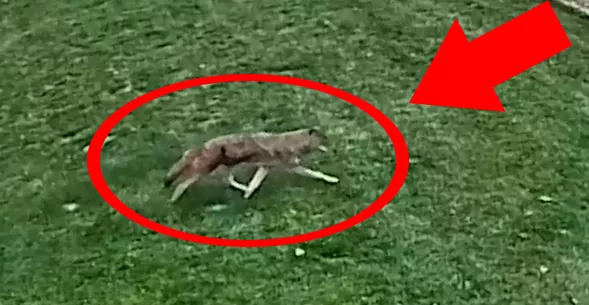
Mike Vincent was doing routine yardwork at his home on Oak Road on Tuesday, October 21, 2025, when nature struck without warning.
The 6:30 p.m. attack came from behind as Vincent trimmed tree branches with a long pole saw, his attention focused upward on the work at hand.
Within seconds, teeth sank into his flesh, and he turned to find an aggressive coyote that had no intention of backing down.
The animal did not bite and flee as wild animals typically do. Instead, it engaged Vincent in what he described as a determined attack, nipping repeatedly at him.
Vincent fought back, striking the coyote in the head with all his strength. The battle ended only when Saddle River police arrived and euthanized the visibly sick animal, which showed no fear of humans.
The Growing Pattern
Vincent’s attack was not an isolated incident. Just one day earlier, on October 20, a 31-year-old housekeeper was mauled by a coyote while in the backyard of a Woodcliff Lake home with the family’s golden retriever.

Surveillance footage captured the shocking attack, showing the coyote pouncing on the woman and leaving her with open wounds on her shoulder, arm, back, and leg.
The homeowner rushed outside to fight off the animal, which also bit the dog before fleeing into the wooded nature preserve behind the property.
That’s why residents throughout Bergen County are on high alert.
These back-to-back attacks in October follow an equally disturbing pattern from late September, when two separate coyote attacks occurred in Saddle River on September 25 and 26.
Both victims required medical attention, and authorities discovered two coyotes in the area. One was found dead, while the other was euthanized due to abnormal behavior. Testing revealed that one of those coyotes tested positive for rabies.
Medical Consequences
The physical and psychological toll of coyote attacks extends far beyond the initial wounds.

Vincent was transported to Valley Hospital for treatment of multiple bite wounds and immediately began a series of rabies shots as a precautionary measure.
The testing of the euthanized coyote would take days, but doctors could not wait to begin the potentially life-saving treatment.
The Woodcliff Lake victim faced a similar ordeal. Because the coyote that attacked her escaped and could not be tested for rabies, she must undergo a full month of rabies shots.
Rabies is a viral disease that affects the central nervous system and is almost always fatal once symptoms appear. Any open wound that comes into contact with an infected animal’s saliva puts a person at risk.
Here’s the catch: Rabies cannot be transmitted through the air, but it spreads from the brain to the salivary glands during the final stages of infection, making animals contagious days before death.
Why Coyotes Are Here
Coyotes are not native to New Jersey. These adaptable predators extended their range north and east across Canada from the Midwest over the past 80 years.

DNA studies show that these coyotes bred with gray wolves before emerging into New England states and extending their range south through New Jersey. They now fill the ecological niche left vacant when gray wolves were extirpated from the state in the 1800s.
The numbers tell a striking story. Coyote sightings have been reported in all 21 New Jersey counties and approximately 400 of the state’s 564 municipalities.
Over the past 30 years, the coyote population in New Jersey has grown from fewer than 100 animals to an estimated 3,000 today. That growth shows no signs of slowing.
But here’s the deal: Suburban development is pushing deeper into wildlife habitats, creating more opportunities for human-coyote encounters.
Coyotes inhabit almost every type of land in New Jersey, from the fringes of urban and suburban developments to open farmland. Their highly adaptable nature and opportunistic feeding habits allow them to thrive in areas where other large predators cannot survive.
Changing Behavior Patterns
Historically, coyotes are naturally wary of people and rarely act aggressively.
They typically avoid humans both spatially and temporally, preferring open spaces like golf courses, urban parks, and railroad corridors with relatively low human presence.
Most coyotes are nocturnal or active at dusk, staying out of sight during daylight hours when people are most active.
However, something is changing. The aggressive coyotes involved in the Bergen County attacks showed no fear of humans and were active during times when people were present.
Police described the animal that attacked Vincent as visibly sick with no fear of humans. This abnormal behavior suggests either disease, habituation to human presence, or both.
Wildlife experts point to several factors that can alter coyote behavior. Feeding coyotes or leaving food accessible is the primary cause of problematic behavior. When coyotes lose their natural wariness of humans, they become more likely to approach people and act aggressively. Even unintentional feeding through unsecured garbage, pet food left outdoors, or bird feeders that attract rodents can create dangerous situations.
The Medical Response
When Vincent realized he had been bitten, his immediate concern was whether the animal was rabid. The coyote’s aggressive behavior and unwillingness to flee suggested serious problems. Officers who responded to the scene recognized the animal’s abnormal state and acted quickly to euthanize it.
The euthanized coyote was taken by Tyco Animal Control for testing. While those results were pending, Vincent could not wait. Rabies treatment must begin promptly after exposure to be effective. The post-exposure prophylaxis consists of a series of shots administered over several weeks. Though the treatment is no longer as painful as it once was, it remains a serious medical intervention that requires multiple visits and carries potential side effects.
You’re better off taking every precaution to avoid coyote encounters in the first place. Once an attack occurs, the medical consequences are unavoidable and expensive.
Community Impact
The series of attacks has shaken the affluent suburban communities of Bergen County. Saddle River and Woodcliff Lake are established neighborhoods where residents expect to work safely in their yards and walk their dogs without fear. The October attacks have forced a rapid shift in that sense of security.
Woodcliff Lake Police Captain Chad Malloy emphasized the importance of awareness. If you live near a wooded area, you must be more aware of your surroundings, he explained. Coyotes lurk in heavily forested areas, and certain practices can attract them to residential properties. Residents should keep pet food inside, secure garbage cans with locks, clear heavy brush that provides cover for coyotes and their prey, and remove bird feeders that drop seeds and attract small animals.
Parents throughout the area are now monitoring children more closely, even in familiar surroundings like backyards. The New Jersey Department of Environmental Protection warns that although extremely rare, coyotes have been known to attack humans, and parents should remain vigilant.
What Authorities Are Doing
Local police departments have increased patrols in areas where coyotes have been spotted. Officers are working closely with New Jersey Fish and Wildlife to monitor the situation and respond to reports of aggressive animals. After each attack, authorities conduct searches of nearby wooded areas looking for additional sick or aggressive coyotes.
The euthanization of visibly sick animals is standard protocol. Testing for rabies and other diseases helps officials understand whether they are dealing with isolated incidents or a broader public health threat. When a coyote tests positive for rabies, as happened with one of the September attacks in Saddle River, authorities intensify their monitoring and public warnings.
That’s why residents are being urged to report any coyote sightings immediately, especially if animals are observed during daylight hours or show no fear of humans. Anyone who sees a coyote acting aggressively should contact local police and the New Jersey Division of Fish and Wildlife at 908-735-8793. Outside normal business hours, calls should go to the DEP Hotline at 877-WARN-DEP.
Prevention Strategies
Experts emphasize that residents can take concrete steps to reduce the likelihood of coyote encounters and attacks. The New Jersey Department of Environmental Protection recommends multiple strategies:
- Never feed coyotes or leave food accessible, including pet food, garbage, fallen fruit, or compost piles
- Bring pets indoors at night and supervise them closely when outside
- Remove attractants like bird feeders at night to avoid drawing rodents and other coyote prey
- Clear brush and dense weeds from around homes to eliminate protective cover
- Install motion-sensitive lighting around the house to deter nighttime visits
- Secure enclosures for rabbits, poultry, and other farm animals
- Remove water sources, especially during dry conditions
If coyotes are present on your property, make sure they know they are not welcome. Make loud noises, blast a canned air siren, throw rocks, or spray them with a garden hose. The goal is to reinforce their natural fear of humans and discourage them from returning.
What To Do During An Encounter
If you encounter a coyote, your response can make the difference between a harmless sighting and a dangerous situation. Wildlife experts recommend specific actions:
- Do not run – Running triggers prey behavior and may cause the coyote to chase
- Stand tall and make yourself appear large by raising your arms
- Make loud noises – Yell in a loud, authoritative voice
- Back away slowly while keeping the coyote in sight
- Do not turn your back on the animal
- Use deterrents like air horns, whistles, or water from a hose
- Throw small objects like rocks or sticks to scare the animal away
Most importantly, never approach unfamiliar animals. If a coyote approaches you or does not flee when you attempt to scare it away, call for help immediately. An animal that shows no fear of humans may be sick and poses a serious threat.
Looking Forward
As suburban development continues expanding into former wilderness areas, human-coyote encounters will likely become more common. Understanding coyote ecology and behavior is essential for successful management and reducing negative interactions. Coyotes play an important role in the ecosystem by controlling rodent and rabbit populations, but that ecological benefit must be balanced against public safety.
Research shows that killing coyotes is not an effective long-term solution. When coyotes are removed from an area, others quickly move in to fill the vacant territory. The focus must be on preventing problematic behavior through education, proper waste management, and maintaining coyotes’ natural wariness of humans.
The Bergen County attacks serve as a wake-up call for suburban communities throughout New Jersey. Want to protect yourself and your family? Start by eliminating anything that might attract coyotes to your property. Secure your garbage, bring pets inside at night, and teach children never to approach unfamiliar animals.
The Bigger Picture
Beyond New Jersey, coyote populations are expanding throughout North America. These adaptable predators now inhabit most major cities on the continent, where they are often the largest carnivore present. Urban and suburban coyotes generally exhibit strong avoidance of humans, but in some individuals, this avoidance diminishes. These animals may forage in high human-use areas during the day and even approach people, increasing opportunities for negative interactions or attacks.
Historically, only two fatalities from coyote attacks have been recorded in the United States and Canada – one in the 1980s and one in 2009. While attacks remain rare, the consequences can be severe. The recent string of attacks in Bergen County, including the confirmed case of rabies, demonstrates that the threat is real and requires sustained vigilance.
Mike Vincent’s experience serves as a powerful reminder that coyote attacks can happen anywhere, at any time, even in your own yard during routine activities. His decision to fight back likely saved him from more serious injuries. The quick response by Saddle River police prevented the sick animal from attacking others.
But here’s what matters most: Prevention is far better than response. By following expert recommendations, securing potential attractants, and remaining vigilant, residents can significantly reduce their risk of dangerous encounters. The goal is not to eliminate coyotes from New Jersey – that is neither possible nor desirable from an ecological standpoint. Instead, communities must learn to coexist with these predators by maintaining appropriate boundaries and ensuring that coyotes retain their natural fear of humans.
The attacks in Saddle River and Woodcliff Lake have united these communities in a common purpose: keeping families, pets, and neighbors safe while respecting the wildlife that shares the landscape. Through education, prevention, and prompt reporting of concerning behavior, residents are working to ensure that the recent attacks represent isolated incidents rather than a new normal.